

EPISODE 1
Know Thyself: What It Really Takes to Go Into Private Practice
Host Dr. Dan Choi sits down with one of the first mentors he called when he started his own practice: general surgeon Dr. Stavros Christoudias, founder and managing partner of Heritage Surgical Group in Teaneck, New Jersey. They talk about what it really takes to leave employment, launch a practice, and keep it independent.
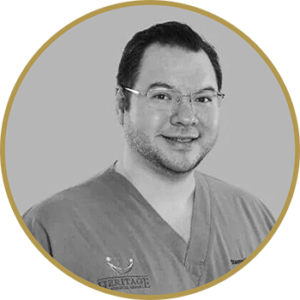
our guest
Stavros Christoudias,
MD, FACS
November 17, 2026 | 125mins

Direct Primary Care
Physician Wealth Building
Staff Hiring
Billing & Collections
Medical Real Estate
watch or listen
Watch the full conversation or listen wherever you get your podcasts.
LISTENING ONLINE AT:

About the Episode
The Blueprint for a Private Surgical Practice
When Dr. Dan Choi opened his practice in 2021, Dr. Stavros Christoudias was one of the first people he called. In this inaugural episode, Dr. Christoudias, a second-generation general surgeon who started out in his father’s practice, explains how he built Heritage Surgical Group in Teaneck, New Jersey, and why he believes independence is still worth fighting for.

The conversation walks through the decisions every physician faces before going out on their own: whether you’re suited to ownership at all, what your restrictive covenant allows, where to practice, who to hire first, and how much cash you need before your first claims are paid. Dr. Christoudias also explains why he chose three small satellite offices over one central location, why he bought small office condos and rents them to his practice, and how No Surprises Act arbitration has changed the economics of out-of-network surgery.
For both doctors, the real reward of ownership is control: over their schedules, their standards of care, and their time with family. Dr. Christoudias closes with a call for physicians to learn the business side of medicine and to show up for advocacy.

What You’ll Learn
Inside the Independent Practice Playbook

- How to tell whether you’re better suited to employment or ownership
- The income and tax differences between employed and independent surgeons
- Why availability, affability, and ability drive referrals
- What to check in your restrictive covenant before planning your exit
- Joining an established group vs. starting from scratch
- Why three satellite offices beat one central office for Heritage
- Why owning your office space can make sense
- Who to hire first, and why to keep at least three months of payroll in the bank
- How No Surprises Act arbitration affects out-of-network surgical pay
- How to talk to legislators in terms of patients and constituents
Key Takeaways
Lessons From the Conversation
01
Know Thyself First
Private and employed practice are worlds apart. Be honest about how much control you want and how much risk you can tolerate before you commit to either path.
02
Read Your Contract Before Planning Your Exit
Restrictive covenants can block you from practicing where your patients and referral network already are. Have a healthcare attorney review yours early.
03
Keep Payroll in the Bank
Reimbursements lag. Dr. Christoudias recommends at least three months of payroll on hand before opening, and he banked his early earnings instead of upgrading his lifestyle.
04
Choose Coverage Over a Showpiece Office
Three small satellite offices gave Heritage wider geographic reach and proved a better financial decision than one large office in Paramus.
05
Be Available, Affable, and Able
Referring physicians remember who answers the call. Responsiveness and respect for staff, nurses, and partners build a practice as much as surgical skill does.
06
Define Success Beyond Revenue
He turned down bigger paydays to be home while his kids grow up. In his view, being a good doctor comes first and the money follows.
“You can end up making all
the money in the world and
still be a failure.”
— Stavros Christoudias, MD, FACS
Dr. Christoudias on why he chose time with his family over a bigger payout, and why autonomy is the real reward of owning a practice.



Meet the guest
Stavros Christoudias, MD, FACS
Dr. Stavros Christoudias is a board-certified general surgeon and the founder and managing partner of Heritage Surgical Group in Teaneck, New Jersey. A second-generation surgeon, he began his career in his father’s private practice and grew it into an independent group with offices across Bergen County. He also directs wound care at Holy Name Medical Center and is a Fellow of the American College of Surgeons.
A longtime advocate for independent physicians and patient access, Dr. Christoudias serves on the New Jersey State Board of Medical Examiners and works with legislators in Trenton on issues including restrictive covenants for physicians.

Episode Transcript
Read the Full Conversation
Welcome to The Independent Physician
Dr. Dan Choi: Hello everyone, welcome to the inaugural and very first podcast recording of the Independent Physician. This is a podcast that I have thought about for probably four to five years. And really because every doctor has asked, how do you just make it in private practice? How do you start a private practice?
Uh, how is it even possible in 2024, 2025, 2026, every year people are asking, is it possible? And it certainly is. And, you know, I’ve been able to become friends, uh, with, uh, private practice doctors all across the country. And what I am planning to do with this podcast is to interview every single one of them as many as possible and get this information to the physician community, to our, really our medical students and our residents. to show them that private practice in the United States is still very much possible in 2026 and private practice doctors are thriving and doing very well. And so our very first guest is a very special friend of mine. His name is Dr. Stavros Christoudias. He was actually one of the very first doctors I called when I started my practice five years ago in 2021. I actually knew him from before COVID days in 2019. when he was part of a big advocacy group in New Jersey and he was doing very special things preserving private practice in New Jersey. He is currently the founder and the managing partner of Heritage Surgical Group in Teaneck, New Jersey. He’s also the director of wound care at Holy Name Hospital in Teaneck, New Jersey as well. And he is one of the few, I believe 12 physicians. who are part of the board of medical examiners for the state of New Jersey. And I’m just proud to know him and all the tremendous work he does. So Dr. Christoudias, welcome. Thank you for spending some time with us this afternoon. Can you introduce yourself, whatever else you think our audience needs to know about you and your practice?
Dr. Stavros Christoudias: Sure. First of all, I want to say thank you. Thank you so much for having me.
Kudos to you for taking the initiative to do this. You know the one thing about physicians and one of the reasons I think we find ourselves in the boat we’re in is you have to choose between time for family time for work and then time for stuff like this. God bless you for being able to do it. Super, super proud to be invited to be here. So yeah in terms of me, you know, I’ll just start telling you – private practice, it’s always been under threat, it’s always been under threat. And I think people need to understand that there are these vested interests in making sure that private practice dies. And there’s, in the state of New Jersey in particular, I can tell you there was this unholy alliance where there were always the three power hubs in the state. There were the doctors, there were the hospitals, and there were the insurers. And generally the doctors and the hospitals were on one side of the line together. and the insurers were on the other side where they were kind of doing, you know, trying to say, we want to pay everybody nothing, you shall work for free. And the hospitals and doctors are saying, no, we got each other’s back. And in 2018-ish or 2017-ish, the hospitals turned to the insurers and had kind of had this betrayal, if you will, where they said, well, we’ll help you screw all the doctors over now that we’ve bought up a bunch of the doctors now that that’s legal. Mind you, it was illegal federally up until 2012.
And they said, now that we can buy up and we have enough doctors, you know what? We’re going to cross the line. If we help you snuff out all the independent doctors, what we’ll do is you guys give us a sweetheart deal. And it was kind of like the hospitals with the insurers against the doctors and patients, I would argue. Because the ones who got shafted there were the patients the worst. And now it’s kind of a pendulum. It’s just the way medicine is. And one of the more fascinating things, I have a very unique perspective. One thing I should mention, my father was a surgeon. Surgical oncology, trained at downstate in Brooklyn, opened up private practice here and I kind of took over his practice. It’s kind of the nightest of my practice, although it was just me and him in the beginning. Me, him and my wife, actually I should also mention that she’s a breast surgeon, made for some great reality TV if we had ever, the nurses just turned me be like, man, if we had a camera in here, this would be great reality TV. You, your dad, your wife.
Dr. Dan Choi: Did they get along?
Dr. Stavros Christoudias: Well, they did and they respected each other, but whenever they had like differences of opinion in the OR, they’d yell at me to yell at the other. They both yell at me as a form of not yelling at each other. So it was really awkward. So it was funny. The nurses used to laugh at me. Like, you’re never going to win. This is so bad for you. But that being said, I watched. I watched through it all as a kid. I remember learning what was going through in my dad’s… When I was 10, 15 years old in New Jersey, it was tort reform. And they went to war with the politicians then and created a lot of bad blood between the doctors and the politicians, the way they were behaving, because doctors were acting.
This is the hardest part about being a doctor is so many people, and I mean this in one of the most serious ways that any med student or resident can hear. A lot of doctors feel we do good work, we do important work, and we are there and we care about people. And all those nights that you’re not at your kid’s birthday party and you’re missing out on university because there’s some emergency or in the hospital, makes so many doctors feel entitled to actually think they can lecture random people and or demand things.
And that’s not the way the world works. Now, it’s like, yes, you suffered. Yes, you went through a ton to become a physician, but you’re going to be paid well to be a physician. Nobody owes you anything. And you can’t walk in the room and start screaming, I’m a doctor. You have to listen to me. You have to learn how to persuade people, particularly politicians, particularly other people who need to listen to you in terms of, listen, I’m not going to sit here. And I’ll tell you one of the most effective testimonies that do go down to Trenton every now and then and testify on bills.
One of the most effective testimonies I ever had was just turning to him and saying, I’m not going to sit here and cry about doctors, about restrictive covenants. I’m not going to sit here and cry and say doctors are going to be, doctors will be fine. Doctors are going to be paid well in the top 5% of the population, no matter what specialty you are, anywhere in the country. That’s not what I’m worried about. What I’m worried about is the effect of this bill on your constituents. How about the fact that you can’t find a pediatric neurosurgeon because one of the three in the state got chased out by a restrictive covenant? You’re, you’re, you’re, you’re, Constituents are who you’re here to answer to. They’re the ones who are going to suffer whenever you lose doctors to restrictive covenants, and that’s who we should be thinking about. And both votes against that bill out of five flipped over to say yes. It was a unanimous bill. After, I was like the seventh or eighth testimony to go. That’s kind of what I try to keep telling, especially the younger guys. Don’t come out here thinking I’m a physician. I know everything better than you. All right, not about politics, not about business. You need to come out and say, Listen, this is my wheelhouse when it comes to medicine. That’s what I need to talk about. Sorry again.
Know Thyself: Employed vs. Independent
Dr. Dan Choi: And I think that, no, no, no, I think you’ve touched on some critical points where I think the theme that as private practitioners we see is that private practice is under attack. And generally speaking, the stats are pretty sobering, right? Now, it’s not 80% of doctors that are in private practice. It’s actually 80% of physicians are employed. And so actually our medical students and residents, as they are coming up, and you and I are a little bit siloed away from this world, because we’re not in academics, we’re in private practice. But every medical student resident I’m sure that is applying to your practice and is applying to my practice, for the most part, has only been exposed to employment, Hospital employment is usually the model that they are told is really the only way to go in America. that, you know, this is…
And they look around and that’s what they see, right? They don’t get any exposure to private practice doctors. So really, you know, if a medical student or resident or even a new attending right now who’s been working for the hospitals and is starting, and I want you to hone in on general surgery, right? If someone came to you today like I did five years ago and asked you, Dr. Christoudias, I need some advice. I love… you know, it sounds like private practice is what I want to do, right? And first of all, touch upon, let’s touch upon that first. Like, why would you be talking to a young surgeon, young general surgeon, that they should be in private practice? And then we’ll go into the technical parts of like how to do it. But what would you tell them? Like, this is absolutely critical because for me, you know how we’ve talked about this over dinner multiple times. This is critical to the profession. It’s critical to doctors. But if you’re talking to that doctor and why is it so important to their family and to themselves and their career and what they’re going to be doing their whole lives. Let’s not talk about macroeconomics because people rarely think about that so much, but for that surgeon, why is it so important for them and why is it so important for their family and why is it important for them economically too as well?
Dr. Stavros Christoudias: So that’s I think that’s an incredible incredibly insightful question, but it all boils down to one I hate to like I’m Greek right so like of course I’m going to bring it back to Socrates right The old saying, know thyself, know yourself. It’s a very, very simple thing. The world of private practice and the world of employed practice, they are literally miles apart. There is a different lifestyle, a different income bracket, a different everything. And you need to ask yourself, what do I want to be happy? And a lot of times you don’t know it until you’ve tried it. So I know a lot of people who tried private practice, didn’t work out, went to the employment model and were very happy or as happy as you can be there.
And I know people who did the reverse. They did the employment model. They’re like, screw this. I’m not doing this anymore. And move over to private practice and I’m never doing it again. I’ve got two people in my group like that now, who were employed and they — every time we have a meeting, they’re like, man, I’m never going back. Thank God, this is so much better because that’s better for them. And I try to tell people, listen, it’s knowing yourself. What do you want? the con, let’s go this very simply put, pros and cons. The pros of being independent. I am the boss.
I am the person who makes the decisions. I have an employee in my office that is really making things difficult. I can choose to let them go. I can decide which EMR I want. I can decide if I want to take the day off. I can decide if I want to work extra time and make extra money. It’s all, the money goes to me. So it’s you in control, but you also have to be able to bear that stress, the sword of Damocles hanging over your head. My God, what happens if the snowstorm hits? Are we going to have parking? We have to get snow for the office. Snow removal like that stuff.
Yes, there’s the headache part, but there’s the benefits of it. I know myself, I know I’m way, way too independent, way, way too loyal to my patients that the day that an administrator told me to do something like using a crap mesh in a hernia repair to save them a few bucks, that hurts a patient but helps their bottom line, I know I’d be fired that day. Because if that word’s coming out of my mouth, it’d be every other four-letter word. They’d be like, you can disagree. No, I would tell somebody who wanted me to help them make more money, put a crappy mesh in somebody.
I wouldn’t miss warzone time and that’s actually happened and I would have been fired but I wasn’t. They can’t fire me. I can just tell them to take this mesh and shove it where the sun don’t shine. That’s me There are people who can do that and can do it and sleep well at night There’s people who want to be off There’s people who don’t want to have headaches and don’t want to and we’re perfectly willing to make a lot less money and be home more and have the hospital worry about coverage, but the problem is
Dr. Dan Choi: How much less money are you talking about in general surgery…
Dr. Stavros Christoudias: Well, the median general surgery…
Dr. Dan Choi: …as a physician who is a practice owner, general surgery, so what do you think the differential is? And you can speak in ranges, whatever you’re comfortable with, but what are physicians leaving on the table financially by choosing employment versus private practice right now?
Dr. Stavros Christoudias: I’m going to talk in mean, I’ll talk in mean now. So we’ve already known, and this has been studied and published, that an average employed physician works an average of two hours less a week and sees an average of three patients less a week. That’s just average. But, what I’ll tell you — what it works out to financially in the world of general surgery, and I’d argue this works for most proceduralists, the employed guys, the average employed surgeon in the Northeast area is working about $300,000 a year. So that’s the average. $275k to $325k is the average for the Northeast or Mid-Atlantic states of America. And that changes, you can actually get all this data off of the AAMC, Association of American Medical Colleges’, website. Our group, nobody’s making less than seven, six or seven, I think, a year, six or seven…
Dr. Dan Choi: 700, 700,000.
Dr. Stavros Christoudias: …and three out of the five are in the seven figures. So we do okay for a general surgeon. So, that’s pretty good.
Dr. Dan Choi: Yeah. How long have the three who are in seven figures, how long have they practiced? How, which are their practices?
Dr. Stavros Christoudias: Well, I started the group in 2012, so the rest of us, the one guy joined 2016 and the one guy joined us two years ago. But he’s like an ex-plant from another group.
Dr. Dan Choi: Okay. Okay. Or even someone who someone who even someone who’s two years in practice, you’re saying broke seven figures, building the right type of
Dr. Stavros Christoudias: Easy. Yeah, you could do a lot better than that. You’re willing to hustle and be alone and have a decent biller, I think you can break seven figures two years out.
Dr. Dan Choi: How many cases is that surgeon doing who’s two years out a year?
Dr. Stavros Christoudias: it’s probably like six, five to seven hundred, somewhere between there. That’s what most of us are, between,
Dr. Dan Choi: Five to seven hundred K’s.
Dr. Stavros Christoudias: Yeah. But they’re all, they’re general surgery cases. I mean, what’s a gallbladder take? 20 minutes? A colon’s an hour? I mean, it’s not, there’s not, these aren’t whipples. They’re not doing those big crazy cases. I think the longest case I do is an abdominal reconstruction with plastics. My part takes an hour, the plastics part takes two hours. So, you know, we’re in there for three hours, but I’m only in there for one.
So yeah, I mean it works out pretty well. And that’s the hard part — is the uncertainty. You can have a day of doing surgery or covering the year where you do six surgeries, get paid nothing on two of them, get paid $50,000 per for the smallest case, and then get paid $400 or $2,000 for the middle cases. A lot of it is so random. And I think that’s what happens is like you have to, in order to be able to, and it’s so funny because I see so many surgeons come out and they’re like, oh, I’m just going to cherry pick. I’m just going to take the ones with good insurance. Oh, what are you going to do when a patient has a perforated colon with Medicare?
You’re going to just tell them, die? Like no, you treat every patient, no matter what insurance they are, and I always tell my new hires, don’t even look at what insurance they have until after you’re done. You treat every single patient, like they’re the Maharaja or the King or the President or whoever, like you treat them all with a red carpet, just focus on being a good doctor. The rest of the money comes. That’s whole thing is if you can manage to focus on being good to patients and making sure they know you care about them, then you will be successful. That is the way medicine works in this country.
The employed guys, it’s —
Dr. Dan Choi: How, you know
Dr. Stavros Christoudias: Sorrysas, go ahead. You were saying? What?
Dr. Dan Choi: No, no, no, go ahead. ahead. What were you saying about the employee?
Dr. Stavros Christoudias: The employed guys, it’s difficult because you’re sitting there working your tail off to augment the reputation of the hospital. It’s not your group. It’s not necessarily you. And the hospitals, feel like, have lost sight of that. They think that we’re plug and play. Dr. A and Dr. B both have the same credentials. Yeah, they’re just the same. Of course they’re not. know, doctors are just like, it’s like, that’s like saying, like, Eric Clapton is the same as the guy playing the pub down the street with the guitar. It’s not the same. There is a difference in talent, in persona, in terms of how many people that person can make happy at the end of the day. And that is essentially what we are. Look, there’s 90 ways to do an appendix, but a lot of this doing it well doesn’t just involve being technical and precise. It involves making sure the patient at all times feels comfortable with you, that they can trust you with their lives. And that’s a privilege.
Nobody should walk into this and this is what makes me a little bit like yeah talking about money is important But it’s not everything if you focus on the money you’re destined to fail if you focus on just delivering good health care and being a good doctor, the money will follow, money will follow even as employed versus independent. Independence is always going to be a little up here — one of the biggest advantages that people don’t talk about of being independent is tax benefits when you own a business when you own an LLC or an S-corp and you own the stuff, your car is a deduction, because it’s a work car. If you work as an employee, you can’t take your car off as a work car, right? You can’t take that mileage because you’re not self-employed. The office, if you own it, you’re paying rent to yourself, you’re essentially going to have that office that the company owns is going to pay off your mortgage through the rent. And in 15 years, you’ll have an office that you own free and clear that your office and your practice paid for, right?
And then after that, it’s income. You can retire and still lease out the office to your old practice. So these are the things that people don’t really think about in terms of independent versus employed, but they make a huge difference in terms of lifestyle and in terms of being able to afford.
Dr. Dan Choi: Sure. mean, I tax benefits are something that really not taught of, know,
Dr. Stavros Christoudias: not even a little.
Dr. Dan Choi: in residency medical school, a lot of attending physicians, you when you really look at a W-2 income, I mean, at the highest tax rates, you’re losing 40% of your income right off the top, right? And the tax benefits that a business owner gets to write off can certainly help with that, right? And, you know,
Dr. Stavros Christoudias: Big time.
Lifestyle, Reputation, and the Three A's
Dr. Dan Choi: Tell me more about — you mentioned lifestyle, right? And, you know, there is a lot of autonomy, flexibility of your schedule that, for you and me, I appreciate about being a private practice doctor. If my daughter has a field day at school, like, you know, that’s getting blocked off. You know, I have to be organized about it and I have to make sure my team knows about it. But, you know, what are the other benefits you’ve seen come to fruition for not just you, but your own doctors in your practice that being in private practice has allowed you from a lifestyle perspective and what you can give your family.
Dr. Stavros Christoudias: Well, that’s the funny thing. So the way I set up my practice, and feel free anybody watching this to steal it, because I stole it from one of the groups at my old hospital where I was training from the vascular group. So what I noticed was vascular in particular, much more than general surgery, has moments where you have to drop everything. You get a rupture AAA in that door, you’re counting seconds before you get there, right? You have a…
A cold leg, you’re counting seconds before you can get the thrombolysis going. So for vascular, they had to have, and they did set up a group, Advanced Vascular over at Morristown, I love those guys. Those guys had a program where they had one guy out of their group of six doctors who would be on call for the whole group the whole week. And if he got a dead leg here, he went running to this hospital. If he had a dead leg here, he went running to this one. And the other five guys, or four guys, those weeks they were living better than a breast surgeon. They were like home.
You know, they start their office hours at 9:30, they’re home at six, they can decide to end office hours early. Hey, just tell the office I ended at four, I got a kid’s soccer game I’m trying to make, you know? And those weeks were very easy. And then you had that one week where you had no office hours, no elective cases, nothing like outside of answering phone calls for your office, but you went running. And so much so that my group has what we call a bat phone, so it’s like an emergency phone.
And that call, that’s the number we give to all the emergency rooms, we give the number to the hospitalists, we give the number to the intensivists, so that they need an emergency surgical consult. They’re calling you directly on your cell phone to the guy who’s on call. No answering service, no nothing. That kind of convenience, or even sending a text. Hey, I’ve got a consult, call about it, please see this. Okay, I’m on it, I’m in the O, where I’ll get the citizen done. Like having that convenience of being able to be called is a huge, huge win in terms of how often we get called in when we’re not on call. So having that ability, to have one guy kind of be hosed for the week and then the other guys who are like living it up, yeah, you want to take the days off, you want to take weeks off, you want to take vacation time, it doesn’t affect anything in terms of the call schedule. There’s no rearranging anything. We set out the call schedule a year in advance and everybody does their vacations around that. So it’s actually such a big boon. Like nobody’s going to count in terms of how many days off have you taken this year. You know what, I’m super stressed. Tell the office, see if they can just block off a day off for me this week, in a couple weeks. I need to take a day off and just sit at home. Sit in a sauna and work out or something and just relax. You can do that. But the irony is this, while you are not paid time off and having to count days off and how many days off are you allowed, every day you don’t work is a day you don’t get paid. So there’s a direct correlation. So what I can tell you is that you can literally just do what our group does where you’re taking call once every five weeks. And just based on that, make, know, take the other three weeks off, four weeks off. We had a guy who did that.
He was eventually had to go out on disability, that’s the whole thing is you can have somebody who you can have a lifestyle where you’re like, I’m going to go crazy for that one week, but I’m going to spend the next three weeks being a stay at home dad, be a stay at home mom, whatever. And just take that one week is where we have to muscle through and then the other four weeks, you’re living it up. And that’s still going to make you way more than most surgeons who are employed. So, and the problem is that, and the really tough part that the guys who were employed tell me is that one of the hardest things for them to do was that they would actually have to get up at three in the morning, do an appy on a 500 pound dude who says he’s in perfect health, but he hasn’t seen a doctor in 20 years, you find out he’s got diabetes, high blood pressure, he’s about to have a heart attack, but you’ve got to get his appendix out, and get paid nothing for it. Get paid zero, nada. Go in and do your surgery, you’re getting the same paycheck that Friday whether you did 800 surgeries or eight. And that’s the whole thing, is it kind of sucks that motivation to get out of bed and do these hard cases that are not paid, and miss out on a holiday or miss out on a birthday.
I mean, I know some employed doctors who just don’t round on weekends. They just don’t round on weekends. They have a patient that’s in the house on Friday. Nobody sees them until Monday. I found that out. I’m like, whoa. Like, that’s not going to hold if something bad happens, but okay. So it’s crazy because the hospitals are very new at determining how coverage works. Who’s going to cover? Who’s going to be covering you here? So the problem is that the hospitals are new at it. The doctors who are disincentivized to not do it, don’t do it.
And then the employed guys tend to be the guys who kind of just tank through, but were also treated like second-class citizens by the hospitals. If you haven’t noticed that. Right? It’s harder to get block time. It takes longer for your partners to get privileges. Yeah. Correct. Correct.
Dr. Dan Choi: Yeah. You talk about private practice. The private practice doctors are treated like second class citizens. Now, you know, you know, on this topic of, you know, kind of, you know, almost like professional development, right? Young surgeons are looking at, you know, you’re starting off, you’ve made it through all this training. You’ve made it through, there’s light at the end of the tunnel, you just grinded through Q2 call, Q3 call, and you’re an attending physician, right? And you’re entering this new position. Interestingly enough, I think that the way that private practice works for you and me is that we are always on call in some ways, right? Which is appealing to some, not appealing to others. Obviously you can structure your practice to not actually physically be on call, but my practice is like, my baby, like it’s my life, my life work, right? I trained to become a spinal surgeon. I’m so proud of my abilities as a spinal surgeon. I’m proud of all the abilities I’ve gained and the experience I’ve gained in the last nine years, you in the last 15 years of practice, right? And you, you constantly like — that’s your identity. You think about it. And I think lots of doctors, lots of young doctors who’ve just graduated, it is part of their identity, right? They’re like, I’m a doctor, I’m a surgeon. This is like, all of me, right? And I think that private practice, why that melds well with that professional identity is because private practice, cannot hide behind a logo, behind a corporate identity. It’s your reputation on the line in the community. And everyone knows, Dr. Christoudias’s practice is of this caliber. And it’s because you’ve put yourself out there and you know, you make sure that the quality of care is a certain level and you know that it all falls back onto you and there’s this perpetuating cycle of reputation increases, the more patients come in through the door. Your reputation increases, more patients come through the door. And I’m sure you’ve seen it with your groups. Can you comment on that? Like the professional development, the arc of that in private practice for a young doctor, and then talk about —
Dr. Stavros Christoudias: Yeah, that’s so important.
Dr. Dan Choi: — how you can build your practice, being private practice, and that type of development.
Dr. Stavros Christoudias: So, I mean, when you talk about actually, this has a lot to do with in terms of what you’re going to be, what you need, the preparation steps to wanting to go into private practice, and this is where I’d start. First, you need to know the environment, right? If you’re in a system or a big academic hospital, and you’re the only private practice guy on staff, you’re not going to do so hot. The people who are going to want to call you are going to be private practice primary care doctors, especially it’s kind of, it’s like us and them, it’s like an insider-outsider group.
And the hospitalists, the hospital employed people are forced to, they are tracked and forced to, like I pretty much at gunpoint, we’re going to remember this in your next contract negotiations, to send to the other hospital employed doctors. Even though that’s technically illegal because it’s technically a kickback. They’ve been doing it and it’s been in much more scrutinized practice in the last few years. So yes, having the actual ability to be an outside or independent physician compared to the ones who are in, those are important in terms of like understanding that there might not be a market. Like you’re never going to be able to get there. And what I’d say really is important for somebody who wants to be independent is your reputation, exactly like you said.
And the reputation takes years and years to build and it can be thrown away in a heartbeat. And pardon me here for mentioning this, but I told you I am on the board so we do have hearings. It’s amazing to me to see doctors who spent decades, decades building this pristine reputation where people admire them. They have a legendary reputation and they throw it away in an instant and over stupid, stupid things. More times women than men, I mean sorry, men than women who aren’t thinking, they’re thinking with the wrong head. They do dumb things and they throw it all away. They throw it all away, and you can lose it all in a second. And that’s the one thing that people don’t realize. Once you’re a physician, it’s that much more scandalous when you do something that is controversial and or illegal because we’re supposed to be the upstanding, trustworthy people. So I mean there was a doctor — I don’t want to mention names here, but there was a doctor in New Jersey who went home with a woman in New York City and like he was armed, he had like a concealed carry gun on him, and she accused him of rape and it was on the cover of every newspaper. Not because he did that, because it happens every day, but because he’s a surgeon and a well-respected one and it’s what made it scandalous.
And it’s Schadenfreude, Schadenfreude at the heart, at the center of the way it’s like people do want to see doctors fall because it’s scandalous and the people do take enjoyment. Wow, those rich hoity-toity doctors, they are fallible and let them — there’s an element to that in society. So you have to be careful. And in terms of actually getting busy and you’re talking about actually somebody who wants to be in a private practice, it’s all about the three A’s, right? You’d heard of the three A’s? You’re going to be judged by the referring doctors by whether or not you are in this order: available, affable, and able. So the three A’s, right? So in other words, availability. Somebody calls you and you’re in private practice and they call you at 7 p.m. on Saturday night and you’re about to go to some concert and they say, I’ve got a free air for you to come into the ER and you say, I’m sorry, I’m not available, I’m at a concert, guess what? You’re never getting a consult again from that person. Right? They want you to be available and at their beck and call 24-7. Sorry, that’s just the way it is.
Because if they have an emergency, they don’t want to sit there fumbling through seven different numbers. Doctor one, doctor two, doctor three. If you’re their guy, you are going to be available 24-7. So availability is first. Affable. Are you a jerk? You know, do not be a jerk. It doesn’t help. Don’t be a jerk to your staff. Don’t be a jerk to the nurses. Don’t be a jerk to the staff in the OR. Don’t be a jerk to your partners. And don’t be a jerk to the people who call you with patients who want to make you money. That’s who you use. There’s no reason for it. All right. Put a smile face on. You can be a jerk in private. Buy one of those like, like those wrestling things from the 80s, remember the wrestling dolls? You can beat them up in the home and like get all your aggression out or get a punching bag. I don’t care. But do not abuse people around you, because it’s going to affect your professional reputation. And third of all, your ability. You can be available all you want. You could be as affable as they are. But if you’re sending people home in body bags left and right and you’re presenting an M&M and you’re the perpetual M&M of the week, every week like, oh my God, I can’t believe we did this. Oh my God, I can’t believe we did that. No.
No, and I’ll tell you right now, the OR staff just the other day turned to me and they said, you know, at one of the hospitals on that, they turned and said, you know, you can be a jerk, but be really good in the OR will tolerate you. And you could be even bad in the OR or take long for your surgeries, but be super nice, but you can’t be both. And if you are both, that OR staff will keep telling the administration to get rid of you until they finally get rid of you. They will file complaint after complaint after complaint of your behavior. And I know one guy right now who’s trying to make it — new guy.Running around, I mean, this guy’s an absolute animal. Like, called to threaten and beat up the chairman of surgery at his house, took his shirt off, like, roid raging at the Dersa station at the operating room. Like, you can’t do this stuff. You cannot do this stuff. It’s going to catch up with you. Yes, these —
Dr. Dan Choi: My gosh. Really? Story?
Dr. Stavros Christoudias: — people are really out there. God, I have story after story. Yes, took his scrub top of in front of the patient sitting there at the front desk of the OR and started raging and flexing, cursing and f-bombing like Grestin Wright, get in the f-ing room right now, like an overgrown child. And if I were the patient and I saw my surgeon acting like that, I’d be like, holy shit, give me another surgeon, give me somebody, give me a freaking robot here, not this guy operating on me, that’s terrifying.
Dr. Dan Choi: He took off his scrub, like scrubs came off, like in the hospital. Wow. Absolutely not.
Dr. Stavros Christoudias: So it’s just wild, it’s wild, the story’s out —
Dr. Dan Choi: No, that’s absolutely not —
Dr. Stavros Christoudias: — there, it’s wild, the behavior you see out there. And rule number one is just the three A’s, right? Available, Able, and affable and able. If you’d finished your residency, you’re pretty much able, right? If you finish your residency, the residency is designed to make sure you’re a safe surgeon.
Making the Leap: Restrictive Covenants and Choosing Where to Practice
Dr. Dan Choi: You know, I think this is my philosophy. I think that right out of training, you need mentorship. Personally, I don’t think trainees right out of fellowship to go right into hanging a shingle and starting your own private practice is very extremely tough in my opinion. I mean, you could do it. You know, I want your opinion on that. But secondly, let’s say that a surgeon has grown their reputation in general surgery in a marketplace, maybe as an employed surgeon, or maybe they were part of another group practice. And they say, look, I want to hang my own shingle. I want to be like Dr. Christoudias. And I am willing to, you know, all the ups and all the downs, I will accept it all. I will be on call 24 seven, I’m going to make this happen. Give me the technical steps. What are you going to tell them and sit them down and say, hey, you’ve got a plan this for the first three months, this for the first six months, 12 months. Who do they need to call? Who are you introducing them to to help them make it happen?
Dr. Stavros Christoudias: So that’s brilliant advice, a great question in terms of, how to get started? There’s two ways you can go about this. The lean way, which is very, very short upfront benefits, but big long term benefits, or the quicker way, but you don’t make as much and that’s to join another separate group. Now first and foremost and this is the most important thing, those are two completely different things. One is the person who’s a fresh grad, you’re de novo, you’ve got no restrictive covenants, you can go and talk and you can go and meet with different groups and that’s the way to do it because you can pretty much always go from private practice with a group, a private group, just don’t sign a restrictive covenant in your contract and then go to employed if you don’t like it.
Going the other way around is impossible for one reason — restrictive covenants. Now I’m in the process of drafting a law with two different, on both sides of the aisle, a bipartisan law in New State and New Jersey that will make restrictive covenants for physicians illegal. Illegal.
And at least if they want to be enforced, the enforcing party has to pay you your full salary. Think about that. So in other words, if you want to go work for so-and-so across the street, they can forbid you, but they’ve got to pay you your salary. And then you have to go work for someone else. So you can make double salary if they enforce you. Now, we’re in the process of getting this up and running. We’ll hopefully be signed by the end of the year. But first and foremost, I would say if you want to go from employed to private practice, the first thing you need to do is look at your contract. Can you? Are you allowed to? Are they going to let you? And if they’re not, the case law in New Jersey says, generally restrictive covenants are non-enforceable for hospitals, but they are enforceable for offices.
So in other words, if your office was right next door to the hospital, you’d have to set up in a new office, even though you can still work in the hospital, nine miles away. This is like the average restricted covenant in St. New Jersey. It’s all about enforceability. And I had, it’s funny, I spent so many years trying to find surgeons, and I couldn’t, I couldn’t, couldn’t. Now the pendulum swung the other way, now that we’re getting paid well, and we’re going to get to that. The pendulum swung the other way, we’re getting paid better than we ever have. It’s better than I’ve ever seen in my career because of arbitrations in the NSA.
Now everybody wants to leave hospital employment because the hospitals now all of a sudden they got over their sweetheart deal and now they’re telling them all we’re going to pay you less we’re going to pay you less we’re going to pay you less and all these employment were like I’m not going to make less than I was making eight years ago I’m going to go independent where I’m going to make twice as much and work half as much, so that’s what’s ending up happening right now is that all of a sudden I’ve got all these people who want to come work with me. So I had a doctor last year who I’ve operated with dozens of times, fantastic hands, talented surgeon gifted touch, Laparoscopically couldn’t operate circles around — and the guy turns to me he’s like, I want to join your group. And I turned to him, I said, that’s great, but you’re going to have a restrictive. I already had somebody from your group try to come and join me. No, no, I’ll take care of that. Don’t worry, it’s no problem. So the guy went and signed up for all this call. And then he tells me up about two months later, he’s like, yeah, they won’t let me out of my restrictive covenant when you take all that call for us, for me. And I’m like, God, we went from being on call three times a week to five now at this one hospital, and it was like craziness.
And it blew up in our faces and I’m sitting there like, oh God, why? Why would I even like, he didn’t even tell me he was going to sign up for all that call. So, yeah, so joining a group that’s out there already and getting out from a restrictive, if you want to be freed, I’d say that’s step one, if you can. Step two.
Dr. Dan Choi: I think there’s a lot of misinformation too, just real quick on restrictive covenants is that people, generally speaking, I feel like that’s the reflex that many people take. Oh, don’t worry about it. Restrictive covenant, I got that. But when I was starting my own practice five years ago, I think you gave me good advice and others gave me good advice saying, respect the restrictive covenant and don’t get yourself bound down in legal warfare, lawfare, when you first start your practice, because you’re going to be so tied up trying to take care of patients and running your practice that if you are getting,
Dr. Stavros Christoudias: Set up a practice, set up an office, yeah?
Dr. Dan Choi: If you’re getting sued, especially by a big hospital employer, I mean, that already is a ball and chain that’s going to sink you in your most vulnerable period. And I think one of the strategies that I employed is I had a restrictive covenant when I started my practice and I made sure to work outside of it. I figured out a way to build my offices outside of the restrictive covenant. I did get some exceptions from the previous employer that I could at least work in the hospitals because that was hard for them to enforce. Exactly. So, but I got that in writing. I got it in writing. That’s critical.
Dr. Stavros Christoudias: That would have been enforceable anyway. Yeah, that wouldn’t have been enforceable anyway. Yes. Well, let’s do about $80k to $100,000 in legal fees. That’s what they do is they’re going to bury you in legal fees. You might win at the end of the day, but you still gotta pay your lawyer. And the cheapest it’s going to be for fighting a restrictive covenant, the cheapest I’ve ever heard is 45 grand. The most expensive one I ever heard was 200 grand. So you better be able to offset that.
Dr. Dan Choi: Yeah. So let’s say that, you figure out. Yeah. Yeah. So, I mean, I think people need to pay attention to that, right? Technically, this is a technical issue. You have to look at that. You have to get good advice, actually pay a lawyer to look at your contract and, and really figure out the legal ramifications are of if you’re going to actually try to violate the restrictive covenant, find out what you’re in for before you just pull the plug. Let’s say you figure that out.
Dr. Stavros Christoudias: Million bucks, million times.
Dr. Dan Choi: What’s that? What’s step number two, Dr. Christoudias?
Dr. Stavros Christoudias: So if I was going to start over, start from scratch, knowing what I know now, the first thing I would do is look at your, first you want to decide where do you want to be practicing. There’s a couple of things you want to think about. Do I want my office to be an hour and a half away from my home or 15 seconds? Do I want it to be, some people even have offices in their home because now that the salt deduction’s gone, you get to take off that square footage of your home if you set up the office in your driveway. Those are making a comeback. Those were big in the 80s when we didn’t have the salt deduction. Then they gave us the salt deduction, they went away, and now they’re back again.
So now people are putting offices in their driveway. You know, have the signs in the driveway that’s making a comeback. Do you want it to be a long commute? Do you want it to be the same home? Do you want it to be a mile away? Do you want it to be a condo? What kind of look do you want? Do you want a mom and pop shop where people are like, feel like, it’s like visiting my cousin? Or do they want it to be like a big aesthetics practice where it’s like walking into, you know, like a fortune 500 weight lobby? Like, what do you want? Do you want these things to think about factoring? And then lastly, where do you want to practice? Now, If you want to have good commercial insurances, it’s not exactly like you want to set up your practice or your office in downtown Newark, no offense to Newark, I love Newark, right? But you’re —
Dr. Dan Choi: Mm-hmm. I trained there.
Dr. Stavros Christoudias: — going to have a different population in Newark than you are going to have in Upper Westchester, New York or Rye or Franklin Lakes or Oakland or Teaneck. I mean, these are all different. So you want to know, where is a good place to go. What I would argue is that the best places to have a good office and the best catchment area is to actually have a place that’s very blue collar. Blue collar plans are the best paying, right? I’ll tell you right now, postal workers have much better insurance than any of my employees. And that’s not because I don’t want to spend it, because I don’t have access to plans that are that good. They have plans that are still deductibles and copays of $400, and everything else is just covered at full. I can’t even find a plan even close to that. So yes, you’d actually be shocked to find out that big unions have much better plans, and blue collar towns have much better plans than rich towns that are buying off the marketplace and getting plans that are ominous bronze with $7,000, $10,000 deductible. So it’s a difference of knowing where you want to be first. That’s where I’d start. I’d start with, geographical region. Is this a place where a lot of private practice is thriving, doing very, very well? And if so, that’s a good place to start. Once you figure that out, gotta find an office.
I tell you right now that I found, and I was at a crossroads in my practice about 10 years ago where I said, okay, we’re trying to make it big time. My dad just retired. I’m going to start hiring more guys. We’re going to need more space. Did I want one office in the dead center of the heart of Bergen County in Paramus, and I was this close to signing a lease there, or do I want three small satellite offices that are spread out? And I’m going to tell you right now, the spread out, I went with the spread out, three separate offices that you can buy little $200,000 condos and own and rent to your practice, that was hands down the much better answer and I’ll tell you why. Three offices, one here, here and here. Bergen County, where I’m in, is like a big triangle. And I’ve got one office in every corner of that triangle. What I didn’t realize is that each triangle had its own catchment area of about, people were on the drive to see you about 45 minutes. So if you go 45 minutes from each office, you’ve now got like the circle that is essentially two million people, two and a half million people all of a sudden.
If I just had that one in Paramus, the one huge office that would have been all nice and done up, I would have only had half the size or a third of the area, if you remember your geometry in terms of circles and radiuses. So I would be serving a lot less patients. I have patients from the office that’s northwesterly the most. I have patients from Pennsylvania see me from there. I have patients from New York seeing me in the Northeast. I have patients from New York City and South Jersey from all the way. I’ve had patients from three hours south of us in Maryland drive up to see me in Teaneck.
So, having the bigger geographical coverage actually ended up being a much better financial decision than having one central office. So, knowing these things, knowing office, and then the hardest part of being in private practice, I’m just going to warn you all now, anybody’s going into it right now, be prepared for the headache that is HR. The HR idea of having employees that, especially whenever the employees don’t get along and this one doesn’t like this one, and then it’s like office politics, it’s a lot. It’s another thing to deal with. And it’s something that’s very hard because you don’t have control over it.
You do have control over it and so far you can say who stays and goes but you want people to just get along. You want everybody to be here to do a job and that’s hard, to find out who’s going to work well with you in terms of their persona, in terms of the way they work, the way you work. There are tools to be able to judge people, the predictive indexes but you have to pay a ton of money for, for personality, that’s work.
Startup Capital, First Hires, and Putting Family First
Dr. Dan Choi: Who are your first critical hires for this person who’s starting their practice? Who do they absolutely need to find? I know they obviously have themselves, they’re other state you see patients, but do you need a receptionist? Who would you say as a general surgeon, in your surgery practice is absolutely non-negotiable in terms of your first hires? And talk about also how you get the money, right? Because if you don’t have the money to pay these people, then… then you’re dead, right? You don’t have practice anymore. No one’s opening your doors. So how do you start thinking about, how do you think about the money and do you have to get some startup money? How much do you think someone needs to start a general surgery practice? Talk about the kind of hiring and finances of starting that practice.
Dr. Stavros Christoudias: Well, the first and foremost, the most important thing is to understand, industry average is about three and a half employees per position. So three employees is about right, for one position. You need a, a scheduler slash receptionist slash, bill, bill preparer, an office manager who’s going to manage the practice. That can be the same person and a biller. That’s the minimum. So you could probably get away with two if you were doing bare bones in the beginning.
And those two people are going to be the most important in terms of set up, in terms of money-wise. The question is how much money do you need to pay them? Generally you want to have at least three months of payroll in the bank ahead of time to know that you’re not going to be struggling for three months before you get your first check. Oftentimes I’d say six if you’re going to be out of network in particular, because it can take a long time to get paid. So six months of capital.
Where do you get that money from? You beg, borrow, you steal it, every asset you can. I know people who did one or two years as an employed doctor, lived like they were still residents, put all that money away, a couple hundred thousand dollars, to be able to afford the other people. So for me, it was the same thing. So when I got out, I was so lucky I had my dad. My dad wasn’t just giving me money for nothing. He put me on a payroll. I made $150,000 my first year. All right? So that was my first year out as a general surgeon. $150,000. Yeah, right?
Dr. Dan Choi: Wow. bargain for your dad. Bargain for your dad.
Dr. Stavros Christoudias: So, and that was it. And it’s not like he was just like, here, take money. That was that old generation. They don’t do that stuff. But I took the money and then I had, and then the next year I tripled that. The next year after that I doubled. Like I was working like a dog trying to get paid and I was putting the money aside instead of going out and buying the multi-million dollar home right away, or buying a Mercedes, I drove a hand-me-down Toyota. I had the money in the bank and I saved it until I bought and paid for my employees. built up the whole practice like to double like in size, but paid for P.A. and P. so that I could collect the assist fees myself when my dad retired. And then finally ponied it up to be able to pay my first other partner, surgeon. And I remember my wife was not happy with me for making that decision saying, okay, we’re making this money, but we can’t spend it. But be able to build the practice up and be able to have a lifestyle, be able to be home to watch my kids grow up, that’s…
You know, this brings me back to one of the more important things that happened when I first started. And I want to start this, this is actually something I want to start in the beginning. When I first started in practice, I grew up, my dad’s friends, all these other surgeons in this hospital locker room were all the surgeons that he would have dinners with. And I was friends with their kids and they were like cousins to me. These doctors were like uncles and I’d stop them in the locker room when I first got there. They would, oh, stop, you’re finally here, congrats. You know, and I turned them and I’m like, listen, I’m here, but my dad’s going to retire soon. I’m going to be on my own. Do you have any advice for me?
And I would ask these old time surgeons, these guys in their mid 60s, 70s, they’ve got grandkids at this point, and I’d ask them all, like, what advice do you have? Should I be in network? Should I be out of network? Should I be in multiple offices? Should I be in multiple hospitals? Should I have multiple partners? Should I be solo? What should I do? Every single one, and this was not coordinated, turned to me and said, Stav, spend more time with your kids. They said, if I could do anything different, if I could do anything different in my career, I would have been home with my kids more.
I missed out on them growing up. I can’t go back and I would give everything financially I have to go back and have one more day with my little kids as they were little and hug them and have to build that relationship that I sacrificed for my career. And this goes back to part of not just doctoring, but they’ve actually, I just watched an amazing interview with Elon where he talked about, he was interviewing somebody else so they were having a discussion and they were talking about the idea that there’s four circles, right? Family, your family, success, business success, your health and your friends. The price of success, you can have three, maybe three. The guys who are really insane, Elon, Jobs, they had two, right? Your health you lose, your friends you lose, you can have family and success, you can have, you know, so it’s just.
It’s this thing that you don’t, and I’ll tell you right now, I chose family. After hearing that, it humbled me. I said, wow, making all this money is not the most important thing. And that’s why very early in my career, I said, you know what? I’m going to put the money aside so I can afford partners so I can have him on call a week and I can spend that time watching my kids grow up. And if I had taken that money, right now I could be making seven, eight million a year myself, but I wouldn’t be home and my kids would be looking at me as the guy who keeps his crap in our house. But to me, that’s not worth that.
Does that make sense? It’s not worth doing that. You have to understand, you can end up making all the money in the world and still being a failure. If your kids hate you and your kids are in juvie and then your wife divorces you, like you don’t want to give all that up. That’s what you’re doing it for. You don’t want to end up winning and actually losing. So again, on that side point, I think that’s important to put aside. In terms of, right?
Dr. Dan Choi: Absolutely critical. I’m a young dad. I’ve got three young ones. I got a seven, five year
Dr. Stavros Christoudias: How old is your youngest?
Dr. Dan Choi: Seven, five, and I have a seven month old, we just had and —
Dr. Stavros Christoudias: Ugh, don’t miss it, Dan, don’t miss it, I’m telling you. When they’re that little and you can just pick them up and they’re this little and they give you the little, and their little arms wrap around you and they tell you they love, my God. As a dad, that makes it all worthwhile, right? Like it’s just like, I just want to make sure they’re okay. And don’t miss it. Don’t want to rush through it. Don’t be at the end of a long day. You’ve operated, you come home, you all the night and you see them. Don’t just walk into your room, walk over and give them the biggest hug.
Just enjoy it because my youngest is 10 right now and she’s even her, she’s she’s like, just get off, like enough hugs dad. I’m like, like, I just did a little one, you know, my biggest son, he’s like as tall as I am now. I’m like, this ain’t the same. I love him to death, but it’s not the same. When they’re that little, like, man, love that much, love that. That’s all I’m going to say is don’t lose that and not enjoy it for a minute. That’s all I can say.
Dr. Dan Choi: Absolutely. No, I’m with you. think that, you know, I took the same stance as you. I hired partners instead of trying to do 500 cases a year, spine surgeon. Yeah. So yeah,
Dr. Stavros Christoudias: On you can’t do five. mean, Jesus, one of your cases is like seven of mine. I can’t even imagine what a spine doing 500 a year would look like. Jesus.
Dr. Dan Choi: we brought on two, I have two partners here in Long Island and that’s certainly helped with my lifestyle. I’ve been able to make a lot of my kids’ events and that’s critical. think again, it’s autonomy, being able to choose, pick and choose what’s important and what’s not for yourself. This is my whole belief in private practice. So, other comments on? Yeah, absolutely. Again,
Dr. Stavros Christoudias: But you’re still doing, but that’s the thing, you’re still doing fine, right? You’re still doing fine. You’re still doing, you’re not going to miss a mortgage payment. You’re not, know, you’re going to be okay, right? Like this, that’s what I try to tell people is like, it’s okay not
Dr. Dan Choi: Doing great, doing great, honestly, you know.
Dr. Stavros Christoudias: to go full fledged, angry, crazy, you know? And that’s the crazy thing too, is the older generation, my dad’s they used to fight over patients. Like, They were like, I remember when in the beginning when I started and there was a patient that I was doing that already had seen two of the other surgeons and didn’t like them so they couldn’t see me. And I was having them on a schedule and I heard the surgeon that he saw first in the lounge, speaking very loudly, whenever other people take your patients, it’s fricking scumbag behavior. And I looked at him like, wait, wait, that patient doesn’t owe you anything. They didn’t like you. They don’t need to have surgery by you. And he was like very offended that like somebody who saw him would have another surgeon and.
The Surgeon Shortage, the Real HIPAA, and the No Surprises Act
Dr. Stavros Christoudias: The irony is that nowadays, we went from a thousand general surgeons in the state of New Jersey serving eight and a half million people to 450 left serving nine million.
Dr. Dan Choi: Really?
Dr. Stavros Christoudias: Yeah, we got cut in half. Yeah.
Dr. Dan Choi: thousand four hundred fifty. How did that happen and why?
Dr. Stavros Christoudias: Because we had the old, first of all, New Jersey is one of the most expensive states to live in. So when you come out of medical school with $300,000 in debt, and you’re going to make $300,000 a year, you can live paycheck to paycheck in a split level for $500,000 in Midland Park.
Or you can live in a 5,000 square foot mansion on Tampa Bay with sun and no taxes. So in terms of being able to attract people, we didn’t attract anybody. So I remember when I first came out, I took a look at our workforce and I said, holy crap, the surgeon workforce in New Jersey is the third oldest, I’m sorry, it’s the oldest in the country, the average age, the average surgeon in New Jersey at the time I graduated in 2012, residency, was over 60.
60% of our physicians or our general surgeons were over 60. We were the third lowest with physicians under 35, which I was at the time. So we had like the least people to replace them with the most people old, and then we went that were old over 60. And then the pandemic hit. Now when the pandemic hit, we were down to 750 already, but we came out of the pandemic, we went into the pandemic with 750 general surgeons, we came out with 510. We’re down to 450.
And this is because of restrictive covenants, this is because people retiring, and because we can’t hire anybody. So the irony is that whenever you create a crunch like that, what you end up creating is a boom. All of a sudden the prices for what we’re getting for a gallbladder now is what people used to get for knees. The orthopedics guys, that’s unheard of.
Dr. Dan Choi: Mmm. I see. Yeah.
Dr. Stavros Christoudias: You know, just to give you an idea what those numbers are, when I first started in 2012, the FAIR Health numbers, which is the usual, the customary, reasonable number for an out of network case was for a hip.
40,000 and a knee 22,000 and a gallbladder 6,000. Gallbladder’s 32,000. These are professional fees. This is for the surgeon. Yeah.
Dr. Dan Choi: Okay. These are professional fees, professional fees with the doctor, with the doctor gets paid.
And just real quick, what is the Medicare rate for that? What was the Medicare?
Dr. Stavros Christoudias: Medicare rate for a knee and a hip was like 4,000, 2,000, and for a gallbladder, 800, right? So now you move on to today, Medicare rate has gone down by one or 2% down, and the hips and knees I think are 30,000 and 10,000 or 12,000, and a gallbladder started. So gallbladder went up by 600%.
Dr. Dan Choi: in the FAIR Health database. Now, I think this is probably, and
Dr. Stavros Christoudias: Yes, this is insane. Insane. It’s supply and demand. It’s a simple math.
Dr. Dan Choi: I think our young surgeons and medical students and residents would be probably shocked to know that in private practice, your gallbladder could be priced at $30,000. That’s the market rate. And
Dr. Stavros Christoudias: Is that crazy?
Dr. Dan Choi: not that many people know that at all, I think. Now,
Dr. Stavros Christoudias: It’s insane.
Dr. Dan Choi: you’ve talked about arbitration a few times just now and NSA.
Kind of explain how that is part of your practice model now and why how a new surgeon could potentially new private practice general surgeon could potentially incorporate NSA and arbitration into our practice to to be. Yeah.
Dr. Stavros Christoudias: That’s a must. It’s not, not can, it’s a must. You have to nowadays insurers are not going to pay you. it’s important when you talk about NSA to talk about how the evolution of medical billing, right? And talk about the most important thing. And by the way, I love that we’re talking about these topics. I’ve given literal hour and a half long lectures about this stuff. for the scope of the podcast, I’m going to shorten a lot of this down, but there is a lot more to know about this.
In 1996, you can Google this or find it on YouTube. There are videos of testimony. Whenever they passed HIPAA, when Bill Clinton passed HIPAA, the biggest misconception right now about HIPAA is that HIPAA is a privacy law. It is not a privacy law. Health Insurance Portability and Accountability Act. It’s not Health Information Privacy Act. That is actually something that we were conned into believing. HIPAA is a bill that was supposed to standardize medical billing.
And the testimony from these ex-billers who worked for Aetna and Cigna coming to Congress and telling them what they were doing with medical bills was shocking. Before HIPAA was passed, medical billing was paper only. And if you wanted to submit a claim with Aetna, you had to call Aetna and tell them, I need your claim submission form. And you want to submit a claim to Cigna, you had to call them and get their form. If you want to get that one from United or Blue Cross, they had their own forms and each form was completely different.
So you had billers that you had to silo, okay, you’re going to be a retina biller, you’re going to be a Cigna biller, or the one in the biller had to know all of it. And they actually had a testimony, one of most impressive testaments I’ve ever seen was the one from Aetna. And this woman said, the congressman said, okay, tell me about your day when you’ve managed claims. Well, I get to my desk around 10 o’clock, and there’s about a two foot stack of paper claims. I take the top foot half, I put it over here, I pull out the garbage can, and I jump it in the garbage can. And that’s the first half of claims done. Then the other half I do, I deny them all. And…
There was no way for you to know that they got it. There was no way to know that you submitted it. You would just submit a claim and nothing would happen. And then you’d call six months later and they’d be like, what claim? And you’d have to file it again and pray it wasn’t in the half that you threw in the garbage can. That’s what it was. So HIPAA was supposed to turn, use the mechanics and the machinery that records a stock trade and bank transfers and NACHA and all of these standardized electronic ANSI developed standards. Remember ANSI, American National Standards Institute. to develop an entire language for medical billing. That’s called administrative simplification. Now, there was an article that by the way I found it first on Google, it’s been buried, it’s disappeared, you can’t find it anymore. And it was an article the next day in JAMA, after it passed saying, my God, is this the heyday of doctors now? Are we going to be able to get paid? Because the insurers can’t hide over ways not to pay us anymore. So the insurers freak out, I can’t believe this bill passed.
Now we have to tell them why we’re denying them. Now we have to admit that we got the claim. Now we can’t deny them. So what do they do? They hire PR firms all over the country and AstroTurf PR firms to convince every doctor, every resident and every medical student in the country that HIPAA stands for, and I got this training, Health Insurance Information Privacy Act. And it is a bill that says if you share a patient’s name or date of birth, that you’re going to lose your license and you’re going to have your doctor stripped from you. Well, here’s the thing.
The privacy law wasn’t finished and finalized until 2009. So they’re going around convincing everybody, don’t look under the hood here. It’s definitely not a good law for you to learn how to get paid for billing. It’s definitely a law to be scared of to lose your license. Do know how many? So the OCR, the Office of Civil Rights is the office that handles every HIPAA complaint in the country. There are, and this number should be shocking to you for how much everybody knows what HIPAA is. There are 2000.
Complaints for privacy every year in the United States. All right, that’s 40 per state. All right, that’s not a lot Okay, guess how many are actually
Dr. Dan Choi: Yeah, it sounds pretty little. Yeah, it sounds pretty tiny.
Dr. Stavros Christoudias: actionable and how many of them actually result in fines and or actions against the doctor? 30 to 60 30
Dr. Dan Choi: Not much, not many. Okay.
Dr. Stavros Christoudias: to 60 one per state per year But everybody’s so terrified of HIPAA and they use this to fire doctors left and right they use this to do It’s not but let me ask you this Look at the administrative simplification section of HIPAA. That section of HIPAA gives you teeth, tells you what you’re entitled to, tells you how you’re supposed to submit a claim and be able to appeal. An EOB is not a claim. An EOB is actually a negotiation. You need to have ability. again, this is something I toyed with is one day teaching doctors how to bill and maybe building a podcast. Maybe we do it all on yours and do like a billing corner once every couple of months or something. But that’s what I’m saying is like
Dr. Dan Choi: You’re welcome back anytime.
Dr. Stavros Christoudias: teaching people this stuff is so important because people need to learn.
If you’re going to have a file a claim, you need to know why you didn’t get paid and you need to know how much you should be able to file a claim, especially if you’re in network, because you have a contract with them, you should be able to file a claim and know exactly what that check’s going to come back for before it comes back. And if you have, this is your predicted income and this is your actual income, well, where did this come from? Where’s that money missing? That’s the easiest part. Now, move forward to the arbitration process. And that was the NSA. Arbitration is essentially you submit a bill, You negotiate with the insurers, they agree to pay you X, you want Y, and if X and Y are more than $1,000 apart, you can send it to an attorney for arbitration. And it’s baseball arbitration. The attorney can’t say, well, you want 10,000, they want to give you 1,000, we’re going to pay you five. The attorney must pick one of your offers. They’re not allowed to split the difference. And what they’re finding is most of these arbitrations for now are going very much in favor of the doctors. very much in favor of the doctors. And you’re getting paid faster, easier, and numbers that you would never get whenever we were fighting with them on our own. Or if you did, it would take you a lot longer.
So our arbitration process is doing very well. The downside of arbitration is that the law says, well, once you lose the arbitration, if they lose the arbitration, they must pay you within 30 days. The average of our check shows up at 90 to 120 days after we win the arbitration.
So they’re way behind. Now we have another law in Congress that we’re forcing through. We have a lot of bipartisan support that says when they don’t pay you within 30 days, they get a $10,000 fine payable to you plus interest. I don’t if you heard about that one.
Dr. Dan Choi: Yeah, so generally speaking, sounds like with arbitration, from a financial standpoint, right, from a doctor who’s trying to start their own practice, that one of the things that would make it completely impossible to start a practice is if a doctor was going to get paid Medicare rates, which is Medicare rates for gallbladder, $800, $600 for being on call. It’s completely implausible and. you know, unrealistic for a doctor to work on those type of fees and also pay their staff, you know, pay all your licensing fees, your malpractice and all this stuff. So, so with arbitration, now there is a way to fight back and not get just subjected to Medicare rates and actually get paid what we call a market rate for your services. Because remember a total knee, interestingly enough, even though Medicare pays $1,200. the hospital, will we get paid $75,000 for a facility fee for the expertise that a surgeon gets paid now by the government $1,200 for. And so now this NSA, the No Surprises Act has kind of restored, it’s restoring the market forces here that the insurers used to weaponize and really subject us to not be able to keep our practices open. So.
Business Plans, Mentors, and Moral Injury
Dr. Dan Choi: So it looks like the new surgeon should probably look into this as a way of funding their practice potentially and getting paid for it. What else does this new surgeon owner need to think about in terms of billers, attorneys, malpractice, technically EHRs? What is the critical like other kind of fine details that they need to nail down pretty quickly or even not don’t start your practice and start nailing these things out. You should be thinking about these things way
Dr. Stavros Christoudias: Head of time.
Dr. Dan Choi: in advance, which is what I did. What are some other top three critical things they’ve got to think about and make sure they make the right decisions about?
Dr. Stavros Christoudias: 100%. So first of all, we talked about HR. We talked about persons, who you’re going to hire, make sure they’re the right kind of person for you. If you are a person who’s type A, you want somebody who’s type B, who’s going to take direction from you. If you’re type B, you want somebody who’s type A, who’s going to be on top of the things you’re not on top of. So knowing what kind of people you’re going to put around you, knowing ahead of time so that you found them whenever you found what you were looking for, not just hire people and I’ll figure out what I’m looking for whenever they show up. You need to know what you need in terms of people around you. Hospitals, service areas, that’s important.
In terms of actually having a business plan have a plan for growth. Okay This is my target revenue just as the part where we’re we’re not really good We never we never went to business school So having a business plan does any doctor know how to write a business plan how to do EBITDA how to do the earnings that did assume That’s the whole thing is like you have to say okay if I make a million dollars and I’m losing 52% or you know If I lose about 40% overall because the taxes are scaled. Let’s say you get you lose 400,000 That means you go home with 600,000 You can take deductions on all of your business expense so that your income comes down out of the top bracket maybe to $600,000 if you spend $300,000 expenses. That’s staff, that’s employment, that’s malpractice. Those are all important things too. Malpractice insurance. It’s important to make sure that if you’re going to have own claims made or occurrence, which are you going to have a tail. These are important things to know that you want to have ahead of time. Whether or not it’s going to continue to cover you after you stop working for hospital. Whether or not you’re going to have to pay for it after you retire someday. These are going to be expenses. know, tails cost money.
And they can be quite expensive. A lot of times hospitals will not give you the tail as a way to induce you never to leave them. Oh, you want to leave? Oh, you want to make sure you’re covered for anything that happened while you worked for us? Gotta pay us 50 grand for the tail. Turns out they’re the ones who do the coverage, it’s self coverage anyway. So it’s like, there’s all of these dirty tricks. There’s a lot of dirty tricks that they
Dr. Dan Choi: It could be pricier than that. Yeah.
Dr. Stavros Christoudias: use to make sure you stay emboldened to them. But most important, I would say the most important advice I’d give to anybody hearing this, you…
Your best way to do this is to find somebody who’s doing well in the area. Somebody who’s a market leader and or doing well. Probably not best if he’s your competition. If you’re a surgeon, ask a urologist. If you’re a urologist, ask a general surgeon. But try to cross, yeah, as I was going to say, your spine,
Dr. Dan Choi: I came to you. Remember, I came to you.
Dr. Stavros Christoudias: I’m general surgery so I can do all the business stuff. I can’t, and you’re not competition, right? So you know I’m never going to be like, oh no, you can’t be, I’ll be like, yeah sure, come on over. And that’s the thing is, find somebody who knows billers, who knows people, who knows practices, knows areas.
Hey, you know what? The Wayne area is probably a better insurance area over here in Bergen, in the Bergen County or Northeastern New Jersey area than the Teaneck area because the Wayne has a lot more of the blue collar workers with the union plans. You’ll do a lot better there. And there’s a lot less competition out there. it’s very, and people don’t realize Wayne has 50,000 people, Hackensack has 48,000 people. So Wayne is just as big as Hackensack, but Wayne is thought of as this like rural country suburb and Hackensack’s considered like this inner city next to New York City city when Wayne’s bigger.
Wayne’s bigger. So I do better out here by Wayne than I do in Hackensack. that’s the fun. And Hackensack’s got everybody fighting to be at Hackensack, but it’s completely a misperception that it’s this big population center when Wayne is actually 10 times bigger with one-tenth the competition. that’s like, these are the same kind of things that a local will be able to tell you that somebody has been working around here and be like, look, if I could do it again, I’d set up shop right there in the heart of Wayne, doing it all over again. Not so much over here by Hackensack. That’s not where it’s at, so to speak. So again, find somebody who is friendly to you. who’s private, those private guys, we do stick together. We don’t like to, you know, it’s like another ally in that battle against the hospital who’s not going to sit for them mistreating us or treating us like secondhand citizens.
Dr. Dan Choi: Where do think you can find them? so like, you know, you go online.
Dr. Stavros Christoudias: professional societies, Medical Society New Jersey, MSNJ, any type of meeting. We all have those meetings. We go to ACS, you know, every year we have New Jersey College of Surgeons. You have New York Medical, the Medical Society, right? Yeah, join the Medical Society.
Dr. Dan Choi: I think that actually organized medicine, which I know you’ve been involved in, actually attracts more private practice doctors to be involved, generally speaking. think when you’re employed, one of the upsides of being employed is, you go to work, you take care of your patients, you go home and you don’t have to think about anything. When you come back, your job is still there, your patients are still there. For you and me, We know that we are one bad law away from getting eliminated. Like our practice will literally get eliminated overnight by a bad law. I’m actually going to Albany tomorrow for two days to lobby about certain laws here in New York state. I’m there like once a month actually. And so actually going to your state society and even the AMA, there are a lot of private practice doctors who are actually very involved in AMA, believe it or not. I know people don’t think that.
But yes, organized medicine is a great way to connect. would also say Becker’s, I’ve been going to Becker’s meetings in Chicago. So there are resources where you can find some of these doctors. And I know you’ve been involved with various organizations there in New York state. So give me the best business advice that you remember receiving. And I know you touched on some. things that you believe in with running your practice. But if you think back, what was the one thing that you stick out that you kind of live by when you’ve, I mean, you’re a huge success in New Jersey. Everyone knows your practice and you’ve built it up, I think over five surgeons. At some point you had more surgeons and you cover multiple hospitals and you were in a phase of growth at all times. What was the best advice you got to grow your practice?
Dr. Stavros Christoudias: It was my dad’s advice, hands down. And I kind of touched on it earlier, but I would just reiterate it. Don’t focus on money. Don’t. Don’t make money your end-all, be-all measure of success. Focus on delivering good medicine.
If you focus on delivering good medicine, and I mean doing the best for every patient you can, you want every patient, when you walk out of every patient’s room, you want them to be sad you left, not glad you left. You want them to be like, wow, I really like that guy. I trust him with my life because they literally do. And you want them to be able to say, hey, you know what? I’m so proud to call that guy my doctor. And if you can, and then, and then have them actually walking off. Like I focus very much on post-operative pain. I remember getting chastised once in surgery from one of the old time guys. for using local for my incisions. And I’m like, what do you mean you don’t use local? He’s like, well, I don’t want them calling me whenever it wears off. They always call me at like one in the morning. And I’m like, are you fucking kidding me? You want to leave your patient in pain because you don’t want bugging you on the phone? Like surgical pain, like an incision? Like, holy crap. Like the amount of hubris and arrogance and conceitedness that showed to me that’s Dr. Ad, I was like blown away.
And that’s my point is just focus on being a good doctor.
Everybody thinks private practice is all about being a businessman. That’s not it. The businessman is a secondary part to support you being a good doctor. And it’s very simple. It’s a simple equation. If you are a good doctor, successful, fine you. You can’t be an unsuccessful good doctor because they’re so rare nowadays. Everybody’s focused about clout and having followers and doing that. And I’m like, the best followers are your patients. They’re your patients.
Dr. Dan Choi: You’re right.
Dr. Stavros Christoudias: They’re your patients. And the thing that I love about being private practice over being employed, those patients are my boss. I work for them. I tell them that all the time. They’re like, well, I feel bad. I’m like, don’t feel bad. Don’t feel bad. You’re my boss. I was like, if I was painting your house and you wanted it orange and I painted it green, would you feel bad for telling me you wanted orange? Like it’s the same thing. But that’s the thing about employed medicine. You don’t work for the patient.
They’re just in your way from a paycheck. The person you work for is the MBA who wants you to use the cheap ortho implant from cheap steel, not the high grade German steel that costs a third as much. And that’s the difference. That’s really the difference for
Dr. Dan Choi: I think what you just said about focusing on being a great doctor and being good to your patients, right? It just resonates so much with me as a founding private practice doctor. mean, that is the motto of our practice. Focus on medicine first, focus on your patients. And then for me, the philosophy has been you have to make sure the infrastructure and the system allows the physicians to focus on being a good doctor.
And when you speak to our employed colleagues, I believe wholeheartedly that our employed colleagues want to be great doctors and they are great doctors, they are good doctors. But unfortunately, what has happened with consolidation and with the administrative overgrowth in these organizations is that there are so many kind of restrictions and barriers that actually the system, and I don’t think it’s anyone’s personal intention. I think everyone has good intentions and even, in the hospital systems, those administrators want the doctors to be great doctors. But when you’ve had these bloated systems, now the system breaks down because there’s 10 people in this chain of command and there’s like eight committees who have to get talked to before a decision gets made. And so now the system does not allow the physician to become, practice good medicine or be a great doctor, right? And I think, can you comment on that, Stavros? I mean, have you seen that?
Dr. Stavros Christoudias: You’re talking about moral injury right now. You’re talking about moral injury right now.
Dr. Dan Choi: a difference? Yeah, have you seen the difference between, you know, your employee doctor? Is there any certain
Dr. Stavros Christoudias: 100%. Yes.
Dr. Dan Choi: case things that you can remember? know, did
Dr. Stavros Christoudias: 100 bits.
Dr. Dan Choi: an employee doctor get told you can’t use lidocaine? You know, I don’t know. Like, you know, what are some indications of this that you’ve seen, you know, in your community?
Dr. Stavros Christoudias: Well, you’re defining essentially moral injury, right? You’ve heard of that term? So I don’t know if you’ve ever listened to her. Her name slips my mind right now. It’s a very wonderful lady who specializes in suicide, physician suicide. And right now she’s got a couple of cases. Pam Wible, she’s fantastic. And I’ve spoken to her
Dr. Dan Choi: Dr. Pamela Wible.
Dr. Stavros Christoudias: a dozen times. She’s absolutely an angel. But she talks about physician suicide being right now a big driver of it is moral injury. Now, moral injury was a term originally started by soldiers. where soldiers in Vietnam, if they saw another person committing atrocity, rape, murder, or something like that, they shut their mouths. You you didn’t tell on them because you were afraid they’d kill you too. You were in the woods with a gun. But having to hold that in, morally, was it morally injurious to that human being, and it scarred them with PTSD. I should have done something about it. Casualties of War, that wonderful movie Michael J. Fox about moral injury, and he spoke out, but he had a great cost to himself. And physicians now are in that position.
I’ve got a CEO who signs my checks and my paycheck and our CMO and they’re telling me that I can’t use the good mesh. And I have to put this crap mesh into somebody that I know is going to crap out in five years. I’ll have to take them back to surgery to remove it. They might lose their testicle. And then I have to put another one back in and put them through three surgeries. if I just used the right mesh the first time? That’s moral injury. That’s moral injury. And right now the employed people are kind of being forced to keep their mouths shut and abide it. And they can’t speak out. That’s one of the big cons. I remember I was telling you in beginning why I knew I could never be employed. The big cons is that I will speak out. For me, it’s more important to be right than to make money. To be morally just. I can turn down, and I can tell you story after story one day over a scotch, I’m sure, and maybe off the cameras. I can tell you about stories of turning down enormous paychecks and enormous paydays because I knew it wasn’t right. And I feel proud of that. I feel very proud. I think more so your character is more about what you say no to than what you say yes to a lot of times.
And this is that.
And this was a lot of that in my career. I’ve had a lot of people, as we’ve held out, we’re the last independent surgical group in Bergen County. Although one group I think is least. I know maybe it is sign of independent. But we’re the last independent group in Bergen County. being the last one means that everybody’s really desperate to get you off the chessboard. And they start throwing bigger offers and bigger offers and bigger offers at you. And they’ve gotten bigger and bigger over the years, but we’ve never said yes. And I’ve always told people I completely refuse to allow this to happen. My partners are like, no, we’re not. We have a no sale clause in my… in my formation documents. So we’re never going to be liquid, we’re never going to be bought out by private equity, because it’s in my formation documents. It’s not actually allowed to happen. So nobody
Dr. Dan Choi: I love it.
Dr. Stavros Christoudias: has to be worried about me selling to the highest bidder, or selling to private equity, or selling to a hospital, because I won’t. I’m like, this practice will be here forever. You’ll be here to be able to make practice. And what we’re actually starting to turn into is the safe haven, the refugee land for people who were employed who are trying to leave, and now they’re like trying to look to work with us. which makes the hospitals want to get us off the chessboard that much more. So anyway, but that’s, I think that’s important. I think it’s way, way important to have more than just on the board.
Dr. Dan Choi: Yeah. Give me one second.
Dr. Stavros Christoudias: What was that?
Surviving the Pandemic, Hospital Realities, and Stories from the OR
Dr. Dan Choi: Absolutely. What’s the single biggest mistake you’ve made, if you think back? And it costs you the most. could be time, money, stress. If you look back at your 15 years or more of being a private practice operator, what was the one big mistake you could identify?
Dr. Stavros Christoudias: You know, I don’t think I can name one mistake. I will say that the pandemic and not knowing how to survive that. I came to the brink during the pandemic. Because I had just hired another surgeon when that happened and I guaranteed his income. So in comes the pandemic and I wasn’t liquid. And the stuff that I would have had to make liquid would have been sold at a much big discount because of the pandemic in beginning.
Dr. Dan Choi: Explain liquidity, just to our audience, like from a voter standpoint.
Dr. Stavros Christoudias: Liquid and just having cash on hand.
It’s just are having something that’s very quickly be able to convert to cash on hand like Bullion or something that’s like over night, you know, a lot of other stuff was mutual funds T bills stocks things like that You can’t convert without taking a penalty and are paying a massive tax on So being liquid and be able to jump it right into your payroll was important. So we actually got we’re very lucky. We got a PPP loan to get us through it Which was forgiven Afterwards, but I’ll tell you it was it was a tough the pandemic was definitely the the biggest test I think of this practice And it’s definitely changed where I’m where I’m living at I can say that I I went going into the pandemic my personal finances was like debt here Income here building more assets at a faster rate than paying down my debt Coming out of the pandemic my like number one priority is just I need to pay off all my debt I want I want no debt no obligations because those debts those mortgage payments those commercial mortgage payments the liabilities That’s what almost sank me. And so I want to be completely on my goal for this year.
Dr. Dan Choi: Mm. Yeah, debt service.
Your debt service was high at a time, and your income dropped.
Dr. Stavros Christoudias: My, yes, my income dropped to zero pretty much. So for the first year, 2020, the governor shut down all the operating rooms in the state. And then for the emergency rooms, nobody was going to the emergency room, even if they had appendicitis. They’re calling our office, like, can I just come to your office? I’m like, I’m not going to take out your freaking appendix in my waiting room. That’s not going to work. You still have to go to the hospital. I don’t want to go to the hospital, I’m afraid of COVID. I’m like, your appendix is a much bigger threat than COVID. COVID has a death rate of 1%, you’re a healthy 30 year old, please go to the ER. So it was hard to even get people to show up in the ER. during the pandemic. it was, there was just a time where it was just zero, absolutely zero. And this employed guy was like loving it because I was paying him to do nothing. And I was like, and I’m like skipping paychecks myself and paying debt. It was just, like I said, it’s something, the biggest mistake, I guess, you know what, I guess I’m bringing it back to the original question. My biggest mistake was allowing debt to move up and I should have been moving debt down. Because I was like, I’d buy this office, oh, this is a tax write-off. This is great. This office is mortgaged. so that the tax payments, the payments for the mortgage are tax deductible, because it’s an LLC. And then when the pandemic hit, I was like, no, this debt is not good. So now it’s like, my goal is by the end of this year to be 100% debt-free, like not even a credit card bill. So that’s the hope.
Dr. Dan Choi: that’s great insight. I mean, I think that there are always pressure points, when you, know, pressure is a privilege. I always live and die by that, right? You know, we’re in a position of privilege to be in places of pressure. But, you know, those are really the moments that kind of define us and, you you could have chosen to fire that guy and, you know, not pay him a salary.
But you were tested. Like that was your moment of where you got tested and your integrity, you know, shown through.
Dr. Stavros Christoudias: I was super, super proud that I didn’t fire one employee throughout the whole pandemic and that every employee remained paid and remained on staff, even though we didn’t have a lot of work to do. I took on that worry for my employees. That’s a moment where being an employee surgeon might have been easier, but it’s not so much. Now, mind where I told you my wife’s a breast surgeon and she works for the hospital. She’s employed, ironically. And I’ll tell you right now, when the pandemic hit, they sent her a letter saying, guess what? we’re not paying you, you’re still not allowed to moonlight, because other people have been asking us to moonlight on COVID floors, on other hospitals. You’re still not allowed to moonlight. Oh, and we’re giving you a 10% pay cut. Don’t like it? Too bad, you’re in a contract, you can’t do it. So there was still a downside to being employed. They can unilaterally decide to either want to terminate your employment or change the terms of your employment. And there’s not much you can do without having to spend an enormous arm and a leg on a lawyer.
So I tried to remind people, was like, well, that sounded like being employed at that time might’ve been great. Wasn’t so much, there was still risks.
Dr. Dan Choi: In some ways, is it more riskier, in your opinion, to be an employed physician today than being independent?
Dr. Stavros Christoudias: That depends how trusting you are. I mean, it all depends on how much you trust them. I’ll be frank with you, I’ve watched some pretty horrendous stuff go down in the names of these hospitals’ employers where they just fire people out of the blue for the most awful decisions and awful reasons. Not justified, it had nothing to do with medicine. We don’t like your politics. We don’t like a he said, she said situation, or they just don’t like the way you smell, or they don’t like the way your friends are, the way you look. I don’t know what it is, but it seems so arbitrary why so many doctors get fired.
And what I find apporrent, and earlier you mentioned about having a gray hair, having an older person in a group when you start out and having them to be able to coach you through difficult cases or problems. That was traditionally called the gray hairs in medicine. And what the hospital’s been doing, I’ve noticed, is the gray hairs over time were paid a little more, little more, little more. Now the corporate, that corporate adage of the ageism that used to go on in the 80s with downsizing, they would take the oldest guy, fire him, hire a college entry kid at entry level pay. and save themselves the $200,000 difference in pay and pocket it and say, it’s all the same. But this isn’t the same as crunching numbers at a stock brokerage. This is medicine. And throwing away a guy with 20 years of experience and picking up some kids who’s got two months of experience and hasn’t actually had a patient of his own yet, that’s going to affect the outcome of your medicine and the surgeries. So that’s what they’ve been doing at these hospitals. And it’s funny because I watch these hospitals like, how did we get all these complications? This is such a puzzle. And I’m sitting there like, gee, yeah, it’s a total freaking mystery. You got rid of all the…
One of my hospitals, I was the newest guy on staff at 2016. I was the youngest guy on staff, I was brand new, and there was a hospital that most people fought to get into and nobody could get in. They’re like, and they told me, congratulations, we’re going to allow you to bring surgeries to our hospital, but don’t think we’re going to let you on the call schedule. These other guys have the call schedule. In a six month period, they lost eight of nine surgeons. And.
All of a sudden they call me like, would you bring us cases? Will you come and take our call schedule? And I’m sitting there like, you just got done telling me, lecturing me why, you know, what am I, I’m never going to do this. Now you all of sudden want me to take on all this stuff? I’m like, I guess. Fast forward to today. I am, at 46, the oldest member of the general surgery staff. That’s insane. The gray hair should be a 65 year old guy who’s seen everything, blood and guts and glory. I’m not that guy. But they’re all of sudden calling me in.
Dr. So-and-so needs help in this room. He doesn’t know what he’s looking at. Okay I’ve become that guy Right, like I’m getting called into these rooms and I’m like sitting there like this is kind of scary like that I’m the old gray hair now Maybe I’m just kind of diluted that I still think I’m kind of young at 46 But 12 14 years is not a massive career To be the guy to call in whenever they somebody sees something that there’s they don’t understand. That’s not right That’s because they got they lost all that old guard. They lost the older guys and it’s kind of a scary thing to be, a scary place to be, is hospital. But that’s, but they make more money.
Dr. Dan Choi: Losing the old guard, you’re saying is a function of probably forced early retirement, which I think both you and I have seen and observed in our communities because of what you’re talking about where physicians are seen as a line item, we’re seen as an expense. And if a physician assistant could actually do and see patients. on an Excel sheet and the work our view is exactly identical. Like why are we paying a physician three times more, right? And there’s very little understanding that every year that a physician or surgeon progresses and gets experience and sees what works and what doesn’t and knows how to avoid complications and that is worth its weight in gold. And you can’t… even put a monetary value on it really. And this is why it doesn’t work.
Dr. Stavros Christoudias: Yeah. You can’t.
Dr. Dan Choi: And so you’ve been seeing that in your community, it sounds like.
Dr. Stavros Christoudias: A lot of that. I mean, I’ll tell you one of the things that I shouldn’t be mentioning this here, but when I was a resident, my hospital, was the weirdest thing. My hospital had this shared drive that everybody was a part of and the administration had their files in there. The nurses had their file. It was professional business. Essentially like anything you want to look up that was hospital stuff was in there. And I remember just looking at it and I’m like, what is this? And I got into it and it’s not password protected and it’s essentially All of the communications at the highest level of this massive hospital system, like over thousand beds, it’s like 2,000 bed system, five hospitals, and their C-suite communications, not emails, but like presentations to each other. And I remember getting into some of these presentations, I’m like, is this like medical? I this is how naive I was as a kid. I’m like, you know, this dumb kid in residency, like half sleep deprived. And I’m going through this file, I’m like, what is this about residents? Like, and I’m watching presentations. about how profitable and how much money a resident can save a hospital by being government subsidized labor and not having to pay for a hospitalist and or answering pages and or being available to do work essentially for free. And I realized, holy shit, we are like literal like commodities to them. They don’t actually see us as humans. It’s literally like, what can we milk out of them? How much harder can we work them
Dr. Dan Choi: Mm-mm.
Dr. Stavros Christoudias: before they break? And the stuff I saw in there was like stunning.
Like, holy crap, they’re talking about ways to get around the residency work hour limitations and make sure that we get more hours out. I’m like, make sure that they do their charting outside of it and tell them not to count it. And it was weird. It was very weird to me, but it was like, eye-opener, like, wow, you think hospitals and the people that run them are like friends of doctors and they’re not, they’re businesses. It’s, you know, pardon the, the, the un-PC analogy. It’s like, it’s like the idiot who thinks a stripper actually loves them, you know?
They don’t love you. They see you as a payday. They see you as profits. And if you’re naive enough to think, they really care about you, you really have to learn. They don’t. They don’t. There’s a few that I would say that I’m fortunate enough CEOs in hospitals nearby that are good, but I also know a couple CEOs that are just about would sell anybody, any relative of their own for a dollar. So a lot of it has to do with how much do you trust them to do right by you?
And how is that really what you want to work for that for me was like the end of my options to work for a hospital.
Dr. Dan Choi: Got it, got it. I have one, know, couple wrap up questions. We’re almost kind of out of time here, but you know, in your practice, you had mentioned some room where, you you have some items that you collect in the hospital, but you know, tell us more about that room. Yeah, tell us more about the room and what is the craziest
Dr. Stavros Christoudias: I’ll you a deal. I’ll send you a photo.
Dr. Dan Choi: case that you’ve done as a general surgeon.
Dr. Stavros Christoudias: first of all, in terms of I’ve had a lot of crazy cases over the years. we had, I do have a room, unfortunately, a part of being a general surgeon as you get called by the emergency room, they’ll call and tell you that, usually it’s a man. I’d say women usually are much more adept at not getting things stuck in them, but it’s usually a man who was Let’s just say, it’s so funny people talk about the pandemic, like it’s just a thing of people like on ventilators. And for me, the pandemic was coming in when people were home or too much time and were jamming things in their bottom. So a lot of time people were home alone, drinking, day drinking, and they would shove things in themselves and they get stuck. And you know, the first instinct I would always ask is like, why do you have to use a bed finial or a snow globe? Like it’s 2020, You can get sex toys off of Amazon with handles and strings that don’t get stuck in you. And these people are like using household items and I’m like, oh my God, flashlights, beer bottles.
So my, I would get something stuck for a while, I had some employees who would run out and buy a non-used version of that thing and we kept it in a box. So there’s a big, I have a big clear acrylic. box and people are like, what is that? And there’s a paint roller in there. There’s a beer bottle in there. There’s a bed finial in there. There’s a snow globe in there. There’s weight of five pound weight in there. Thumbel. These are all things. No, no, they’re not. There’s no just. That box would not smell very good. Yes, it always has to go to pathology when you take something out of somebody.
Dr. Dan Choi: So not the actual item, not the actual item in the patient. That goes to pathology. yeah. Yeah. Yeah.
Dr. Stavros Christoudias: The irony that you need to know is that you have to send that thing to pathology to prove that the whole thing is whole. Does that make sense? So.
Dr. Dan Choi: Yep, makes sense.
Dr. Stavros Christoudias: Like, for instance, I had one where I didn’t know, I learned from my job, what pegging is. I did not know what that is. Apparently that’s where a woman puts a strap-on on and decides to have sex with her husband as the pitcher, not the catcher. And apparently they bought this strap-on on Temu because it wasn’t very sturdy. per her words, she said, I really got into it and I guess I was a little too violent and this thing disintegrated in his bottom. Now,
Dr. Dan Choi: integrated.
Dr. Stavros Christoudias: It’s like cheap plastic came apart. Like think of a flashlight. What do you see inside of a flashlight? That’s what came apart. It was like springs, batteries, screws, metal flanges. open up a flashlight, look inside, look at all that metal around it. That’s what disintegrated in this guy’s bottom. So I had to go in there and I had to pull them out one at a time. I’m like cutting, like I’m cutting my gloves on the screws because they’re sharp. The spring ends are like cutting me. I’m like sitting there like I’m literally getting caught up. Now.
No, no, transanal. Like, you know, just a little bit of muscle relaxing. It’s like, it’s like picking up, trying to pick up coins in between the couch cushions. You know, you’re like, you’re like doing this thing in the back of your fingers or trying to reach this little thing. Um, yeah, I didn’t know. So I was there. Usually taking one of these things out takes like 10, 15 minutes. Uh, this was like an hour and a half. I had to bring in fluoro to make sure there was no more metal in there. Like it was, it was a whole, it was a whole thing. It was to this day. Yeah. It was like, to this day. I did.
Dr. Dan Choi: Hour and half. You got everything out? You got everything out?
Dr. Stavros Christoudias: I mean, I did, eventually, and he didn’t get hurt. The fear is you can’t leave a screw in there, it could perforate. So you have to get it all out. So I had to bring fluoro, we’re doing x-ray, and it sucks. And the people, it’s so funny, because so many people are so convinced to tell you. The other people, at least this one, the wife was like, no, it was me, they were very forthcoming. It’s amazing how many people expect you to believe that they walk around naked and fell on things. They’re always like, I was just walking around naked, I fell on that shampoo bottle.
I’m like, yes, I don’t think you fell on the shampoo bottle to go all the way in. You know, I’m like, no, no, that’s definitely so yes, there’s definitely a lot of that. Weird cases, I mean, the five years I did trauma over at Morristown, that was really wild. We had a couple of crazy cases out there. I had one guy, I’ll never forget, got in a fight with his wife. She said she was leaving him for another man and he got very upset, ran away from home at like one in the morning. calls her at 5.30 in the morning and says, I’m going to kill myself. She says, fine, kill yourself. She’s like, I don’t care. So he decides to take a pocket knife, goes in right here, right medial to vessels. So he missed the vessels. If you want to cut the vessels, you gotta cut out here. So he cuts right
Dr. Dan Choi: Ooh, yeah, yeah, yeah, yeah, they cry.
Dr. Stavros Christoudias: medial and drags the knife up like this to the other side and stops at the other vessels. So he misses all the vessels. All he did was essentially turn himself into a pez dispenser. Like he lifted his head up like this, you could see his neck, like his throat, his airway, his glottis. So he passes out from the pain, he thinks he’s going to die. He wakes up an hour later. Now this is like fall in the Morristown area, it’s like October in Northwestern New Jersey. It’s like 30, 40 degrees out that time of night, November, October. So the cold actually ended up saving his life, because anything that was bleeding stopped. And the cold kept him hypothermic, so he didn’t bleed as much. He wakes up an hour later, realizes he’s not dead yet, realizes he pooped in his pants, and the poor guy… takes the poop in his pants. This is a guy who’s not with it. You he’s losing his wife, takes the poop and starts jamming it into the neck hole. So he’s trying to kill himself by choking himself on it. Doesn’t work. Passes out again. Wakes up an hour later, finally calls 911. So they bring him into the trauma bay, and I’ll never forget because I’m sitting there and I look up and I’m like, holy shit. Like, why is he’s not, guys, he’s got no collar on, he’s intubated, wide awake. What’s going on here? He’s not on a backboard, So the EMT looks at him and goes, show him.
And he goes like this with the ET tube in and I can see the ET tube going through here and down into his throat. Like open it. I’m just like, oh, okay. I was like, give me a second. So I walk over to the phone, very calmly, I dial the OR and I get on the phone. I’m like, open the fricking room right now. Please don’t, coming in on open neck. I’m like, get over there. Get over there, we’re going to get a room ready right now. I hang up the phone, I’m like, we’re going to go into the OR now. And I’m trying to keep it calm and I’m sitting there like, holy crap, I’m like, look at this guy. And I can see the artery, he missed by like literally fractions of a millimeter.
And I’m sitting there like, I can see that if that blows or if that, like he’s, we’re in for a big messy room. But essentially, essentially I did get him into the OR. I closed all seven layers one by one, starting with the inner suture, wash, wash, I’m washing out leaves, I’m washing out poop. I’d say that’s probably the craziest case I’ve had yet in my career. He did well, survived. Wasn’t able to swallow anymore though. He had to live with a peg tube after that because the swallowing apparatus was damaged. So anytime he drank he’d choke.
So he had, I, I, so he left the hospital using a feeding tube. I never found out what happened to him. But it broke my heart. It broke my heart to hear it. But crazy case.
Dr. Dan Choi: Sure. Yeah. Thank God you were on call. Thank God you were on call and you saved his life. You saved his life.
Dr. Stavros Christoudias: That’s crazy. Yeah
Dr. Dan Choi: like many of the listeners on this, of this podcast, think, you know, this is the podcast that’s directed at our future generation of physicians and also practicing physicians now. We, you know, I know Dr. Christoudias and I, know whether you’re employed, practice, look, being a doctor, not easy. in any specialty. I think we all can agree on that. And, you know, we admire and respect the heck out of all of our colleagues and the tremendous work and dedication you have to our patients. And part of this is, we talked about this, we need to figure out how we can restore our profession to be able to continue to preserve the ability. to be great doctors, right? And it’s no fault of our own, sometimes the system. And I think today, Stavros, you shared some valuable words of wisdom with our audience members and our physician colleagues. And I really appreciate all the work you’ve done, really preserving our profession and the quality of care for our patients. So thank you again for joining us today. we will…
We will, see you, I’ll see you for some more Korean barbecue in Manhattan or Jersey one of these days. All right. that’s new. Absolutely.
Dr. Stavros Christoudias: Amen. That or hopefully a poker game. Thank you so much for having me on. I just want to say I appreciate the gracious invite. If anybody ever wanted to reach me or any questions on any of other stuff. Like I said, if you ever want to do like more billing, that’s the one thing I’ve always wanted to do is kind of like, hey, you know, having a resource for people that are just like, hey, should I do this? Should I do that? How do I get billing done? If not me, somebody nearby you or somebody who’s there’s people out there willing to help. Generally, doctors are generally very want to be very helpful.
Most people, most people. So having other colleagues as a resource is definitely, I think, best way to go. But thanks for having me on. I really appreciate the invite. I appreciate this conversation. This was fun. Appreciate it. Thanks, bud.
Dr. Dan Choi: Thanks, Stavros. Thank you, buddy.
disclaimer
This episode is for educational and informational purposes only and does not constitute legal, financial, billing, or business advice. Physicians should consult qualified professionals about their specific situations. This episode contains explicit language and a description of a suicide attempt. If you or someone you know is struggling, call or text 988 to reach the 988 Suicide & Crisis Lifeline.
NEWSLETTER SIGN-UP
The latest insights for independent physicians.
Get new episode alerts, curated practice-building resources, and insights from our physician network.